Thinkwell connects the work of gathering information, understanding audiences, producing communications, coordinating execution, and measuring results. Each capability can support a specific task, but the greater value comes from keeping them connected.
Rather than working through a succession of disconnected tools, teams can move between research, analysis, planning, and delivery while retaining the sources, decisions, and objectives that inform the work.
01
Research
Start every decision from the evidence.
A good decision begins with knowing what information is available, which sources are reliable, and what remains uncertain.
Thinkwell brings official records, public information, research materials, and institutional knowledge into a shared environment where teams can investigate questions and develop briefs with their evidence attached.
What it makes possible:
More thorough research, accessible institutional knowledge, and conclusions that can be examined rather than simply accepted.
Legislative tracking
Follow bills, amendments, committee activity, votes, and regulatory developments across relevant jurisdictions. Connect changes in legislation to the issues and objectives your team is already tracking, so important developments can be examined in context.
Judicial and regulatory research
Investigate court decisions, agency rules, administrative proceedings, and other official records. Bring relevant findings into ongoing projects without separating the interpretation of a development from the source material behind it.
Research synthesis
Bring together reports, notes, historical records, and external references. Identify connections between sources, examine competing explanations, and produce research materials that preserve traceability.
Reference retrieval
Find relevant evidence across connected sources and previously completed work. Keep references available as a project develops, allowing people to revisit the basis of an argument or decision.
02
Listen
Know what people are saying, while it still matters.
The information that matters to an organization rarely arrives through one channel. Important developments can emerge from a government announcement, a local news report, a social conversation, or a change in how an issue is being discussed.
Thinkwell brings these sources together and helps teams recognize changes relevant to their work.
What it makes possible:
Greater awareness of emerging developments and a better understanding of how the public information environment is changing.
News networks
Monitor reporting across relevant outlets and examine more than the appearance of a keyword. Explore framing, claims, sources, and differences in how an event is being presented.
Social media
Track public conversation across connected platforms. Identify developing topics, recurring concerns, influential contributions, and changes in observable engagement.
Government communications
Follow agency announcements, official statements, press releases, and public records. Connect new information to existing projects and notify the people responsible for evaluating its significance.
Sentiment analysis
Examine how subjects, organizations, and ideas are discussed across different sources and audiences. Compare changes over time while retaining the underlying evidence and context.
Alerts and monitoring
Set priorities around the issues, people, and developments relevant to an objective, reducing the need to manually review every source.
03
Craft
Turn one brief into a finished body of work.
A strong argument should retain its logic as it moves between formats, audiences, and channels.
Thinkwell helps develop communications and creative materials from a common objective, allowing teams to adapt the form of the work without losing the information and reasoning behind it.
What it makes possible:
Less time reconstructing the same information for each deliverable and more attention available for the judgment, editing, and creative work that matter.
Content creation
Develop briefs, memoranda, reports, public statements, articles, presentations, and campaign materials. Use available research and organizational context to shape drafts for review and refinement.
Persona generation
Build working audience profiles using available data and defined assumptions. Explore relevant needs, perspectives, interests, and communication considerations without treating an inferred profile as a complete account of a real person.
Data storytelling
Turn complicated information into understandable presentations through charts, narratives, reports, and interactive visualizations. Make the evidence easier to explore while preserving its meaning.
Reference retrieval
Find and incorporate relevant source material while drafting. Maintain the connection between important claims and the evidence supporting them.
Audience adaptation
Develop variations of a message for different contexts, formats, and audiences, with the underlying objective available for comparison.
04
Simulate
See how it lands before you commit.
Before making an important decision, it helps to consider how the people affected might understand it differently.
Thinkwell uses modeled audiences and scenarios to help teams explore alternative interpretations, investigate assumptions, and prepare for possible responses.
What it makes possible:
Better preparation, more informed comparisons, and opportunities to identify weak assumptions before they become costly decisions.
Audience segmentation
Examine audiences according to relevant attitudes, behaviors, interests, and other available characteristics. Look beyond broad demographic categories to identify meaningful differences within a population.
Persona modeling
Create simulated audience profiles and use them to explore how a communication or decision could be interpreted. Compare the assumptions and reasoning involved in different responses.
Intent mapping
Investigate possible objectives, incentives, and concerns that may influence an audience or stakeholder. Use observable information and explicit assumptions to identify questions for further research.
Scenario comparison
Compare alternative messages, approaches, and proposed decisions before committing resources. Evaluate how each relates to the intended objective and where important uncertainties remain.
05
Deliver
Broadcast across every channel, from one place.
A communication strategy is only useful when the work reaches the people it was intended to reach.
Thinkwell helps coordinate production, review, scheduling, and distribution across connected channels while preserving the relationship between each communication and the broader project.
What it makes possible:
More consistent communication, clearer responsibilities, and a connected record of what was produced, delivered, and received.
Social posts
Develop and organize platform-specific content. Coordinate timing, review drafts, and examine responses as part of an ongoing communications strategy.
Articles and releases
Prepare substantive documents with appropriate structure, sourcing, and institutional context. Maintain approval processes and references through the publication workflow.
Email and messaging
Organize direct communications using known contacts, relationship history, and relevant project information. Draft and review messages in context before distribution.
Distribution workflows
Coordinate communication across available integrations, assign approvals, and connect delivery activity with resulting engagement.
06
ScoreComing soon
Measure every move, instead of guessing.
Professional work should be evaluated against what it was intended to accomplish.
Thinkwell uses objective-based assessments to help teams examine the quality of their work, maintain shared standards, and connect decisions with their results.
What it makes possible:
More consistent evaluation, more useful reporting, and a record of how decisions and outcomes relate to one another.
Performance evaluations
Assess communications and deliverables against defined objectives and relevant criteria. Examine strengths, limitations, and suggested improvements before finalizing the work.
Content moderation
Apply organizational guidelines and review standards to proposed content. Flag potential issues for human consideration, including unsupported claims, inconsistent messaging, or other concerns relevant to publication.
Engagement analysis
Connect communications with observable audience responses, including available channel and performance data. Compare results and investigate which factors may have contributed to them.
Personalized goal planning
Keep ongoing projects associated with their objectives. Review progress against agreed measures as circumstances and priorities evolve.
Reporting and institutional learning
Bring together assessments, outcomes, and the reasoning behind earlier decisions so teams can learn from their work over time.
Don’t break your focus.
Your Thinkwell workstation.
Thinkwell’s capabilities come together in five connected modules. Each provides a different view of the work, while drawing on the information, context, and objectives shared across the platform.
Where your projects get planned and run.
From an objective to a finished planDescribe what you need in plain language and Thinkwell™ plans it into tasks with owners and runs it through to the finished deliverable
SampleTap or rest on a screen to read what it does. Each one is the real app, with sample data.
Describe an objective and organize the research, tasks, people, approvals, and deliverables required to accomplish it. Project Studio connects a team’s work to the reasons behind it, keeping responsibilities and progress visible as a project develops.
Every signal and story in one feed.
The story beneath the headlineRead the news with the bias, fallacies, and claims surfaced, and see how each outlet frames the same event
SampleTap or rest on a screen to read what it does. Each one is the real app, with sample data.
Bring reporting, official announcements, and public developments into an organized news environment. Examine claims, sources, framing, and relevance to the matters your team is following. Save findings, share information, and develop briefs without losing the original record.
See what is moving, and why.
Reveal the “why” behind the “what”Monitor every signal in live dashboards that show what is changing and the story driving it
SampleTap or rest on a screen to read what it does. Each one is the real app, with sample data.
Create configurable views of news, social engagement, legislation, markets, project progress, and other monitored signals. Connect dashboards to objectives so teams can investigate changes and understand their practical significance.
Every conversation in one queue.
Know what to answer firstEvery channel in one inbox, triaged by what matters now, with replies drafted in context
SampleTap or rest on a screen to read what it does. Each one is the real app, with sample data.
Bring communications from connected channels into a shared workspace, organized by person, project, and priority. Draft responses, assign follow-up, and maintain the context of important relationships.
A responsive timeline for important work.
Prep time, found for youThinkwell™ reads your schedule, finds the open windows, and protects time to prepare for what is coming
SampleTap or rest on a screen to read what it does. Each one is the real app, with sample data.
Coordinate meetings, hearings, publishing schedules, deadlines, and project milestones. See how responsibilities depend on one another and protect the preparation time needed before important events.
Everything you need to coordinate work and improve decisions.
Thinkwell supports connected workflows across research, communications, monitoring, audience analysis, project management, and evaluation.
Capabilities and modules can be configured for the sources, integrations, and objectives relevant to your organization.
Public records like the ones Thinkwell works from. Each count says where it came from and when it was read, and refreshes once a day.
MeasuredMeasured, not sampled
95%A blind second reading agreed with Thinkwell’s stance judge on 95% of 161 checked pairs. It never swapped a yes for a no.
19 of 22Items in a sponsor-commissioned poll were worded toward the sponsor’s side, and the gap between the poll and what people said online followed that wording.
69% vs 22%Top-level comments posted in a thread’s first 15 minutes reached its top quarter 69% of the time, against 22% for those posted 3 to 12 hours in.
Findings from one claim study, October 2026. Real people and real posts, checked blind. Not a guarantee.
Against the alternatives
One column is full.
Fifteen things a public-opinion team needs, against five kinds of tools. Pulp, the company behind Thinkwell™, covers every row; no other kind fully covers more than one.
LiveIn a shipped product today.BuiltBuilt and checked, now in validation.YesYesPartialNot foundNot found
Pulp against five kinds of alternative tools
Capability
PulpStatus today
Social listening suites
Synthetic-respondent tools
Polling firms
Public-affairs platforms
Authenticity tools
Stance on specific claims, not just sentiment
Live
Not found
Not found
Not found
Partial
Not found
Claim and argument typing: fact, value, policy
Built
Not found
Not found
Not found
Not found
Not found
Intensity of conviction, beyond positive or negative
Built
Partial
Not found
Not found
Not found
Not found
AI personas
Live
Not found
Yes
Partial
Not found
Not found
Personas calibrated to verified humans, with statistical guarantees
Built
Not found
Partial
Not found
Not found
Not found
Identity-verification tiers on every number
Built
Not found
Not found
Partial
Not found
Partial
Survey wording and bias audit
Built
Not found
Not found
Not found
Not found
Not found
Persuasion scoring of messages and arguments
Live
Not found
Not found
Not found
Not found
Not found
Message testing of wording variants
Live
Not found
Partial
Not found
Not found
Not found
Timing: when signals arrive and when to respond
Built
Partial
Not found
Not found
Not found
Partial
Conversation structure: who persuades whom
Built
Not found
Not found
Not found
Not found
Partial
News, social, comments, surveys and interviews in one model
Built
Partial
Not found
Not found
Partial
Not found
Coordinated-campaign and astroturf detection
Built
Partial
Not found
Not found
Not found
Yes
Real-time monitoring and alerts
Live
Yes
Not found
Partial
Yes
Partial
Publish, then measure whether it persuaded
Live
Partial
Not found
Not found
Partial
Not found
Rows covered
15 of 156 Live, 9 Built
61 full, 5 partial
31 full, 2 partial
30 full, 3 partial
41 full, 3 partial
51 full, 4 partial
From a scan of 12 tools’ public materials, October 2026. “Not found” means no evidence in those materials, not proof a tool lacks it. Where other tools lead, such as very large panels, image recognition and broad platform coverage, we leave the row out rather than claim to be even.
Trust the number
Personas are fast. Verified people keep them honest.
BuiltSimulation-tested, not yet run on a live panel
Simulated audiences answer in minutes, but on their own nobody can say how far off they are. Thinkwell pairs persona answers with a smaller sample of verified people and corrects the personas against them, following peer-reviewed research.
The correction comes with a stated margin that holds for the sample you actually have, not for an ideal one.
Up to 35%less sampling noise in simulation, at zero bias, against a plain human-only estimate.
On every result
A disclosure sheet
Identity tier
Who stands behind the number, from real ID to self-attested.
Sample
How many verified people, and how many personas, went into it.
Effective N
What the blended sample is worth, stated as a count of people.
How it was made
The method, its version and the calibration curve behind it.
How the stance judge is checked
Every stance reading is made by a model. Before we trust it, it is checked blind, against people and against a second model.
95%agreement with a blind second reading, across 161 pairs.
92%agreement with an independent second AI model, reading blind.
50 of 50cases passed on a hand-written negation test.
Where the number comes from
Turn off a source and see what it was worth.
Every number shows where it came from. Switch a source off and the result moves by exactly what that source added, and no more.
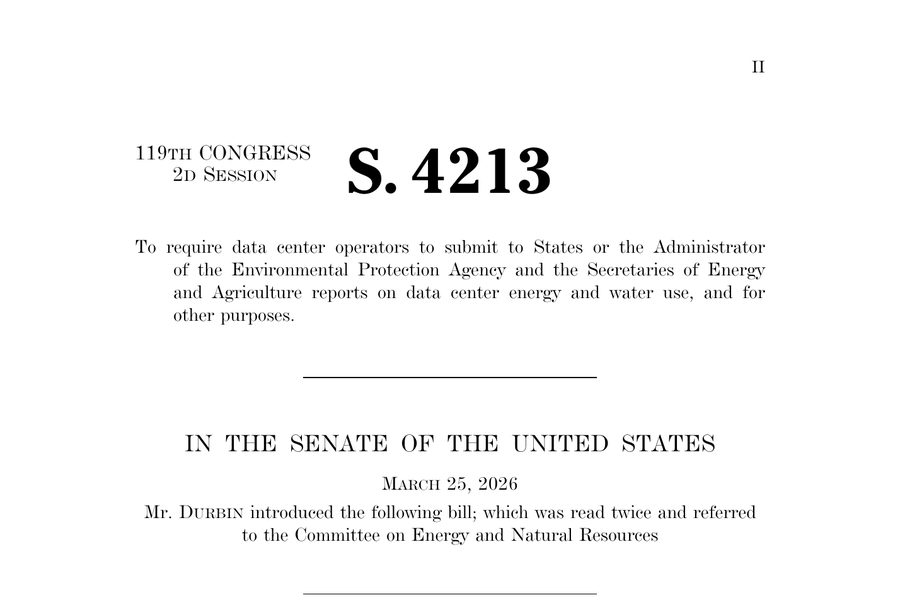
S. 4213, the Data Center Water and Energy Transparency Act, as introduced in the Senate on Mar 25, 2026
Try it
1Switch a source off.
2Watch the number and its range.
SampleThe data center draft from the home page’s Try it
Racine’s own figures, released after a records lawsuit: about 2.8 million gallons a year in phase one, up to 8.4 million later.
Wisconsin Public Radio, Sept 17, 2025
“Over 90% of our datacenter capacity uses this system, requiring water only once during construction.”
Microsoft, on its Mount Pleasant campus, Sept 18, 2025
AB 840 would have required a yearly water report to the DNR. It passed the Assembly 53 to 44 and died in the Senate on Mar 23, 2026.
Wisconsin Legislature, 2025-2026 session
Up to 7 million gallons a day of Lake Michigan water may go to Mount Pleasant, up to 2.7 million of it consumed.
Wisconsin DNR, 2018 diversion approval
“The new data center will report its Lake Michigan water use every quarter, checked by an outside auditor.”
Support for this sentence58%
Range 53% to 64%, 50 simulated residents
Never one number on its own: you get the range, where each point came from, and who it speaks for.
Why it’s safe
A room for each client.Nothing crosses between client workspaces unless someone shares it.
Roles and an audit log.Every sign-in, approval and export is on the record.
Every number has a source.Answers say where they came from, and how sure they are.
A yes before anything sends.Drafts wait for someone allowed to approve them.
We’re proud of what we’ve built.
Thinkwell™ speaks for itself.
Literally.
See the workstation, explore a real workflow, and discover how Thinkwell can be configured for your organization.